
Fencing a Sloping Block in Brisbane: Stepped or Raked?
Fencing a sloping block in Brisbane? We explain stepped and raked fences, gaps underneath, gate placement and what affects your design and quote.
Gregory Fencing & Decking7 November 2026 5 min read
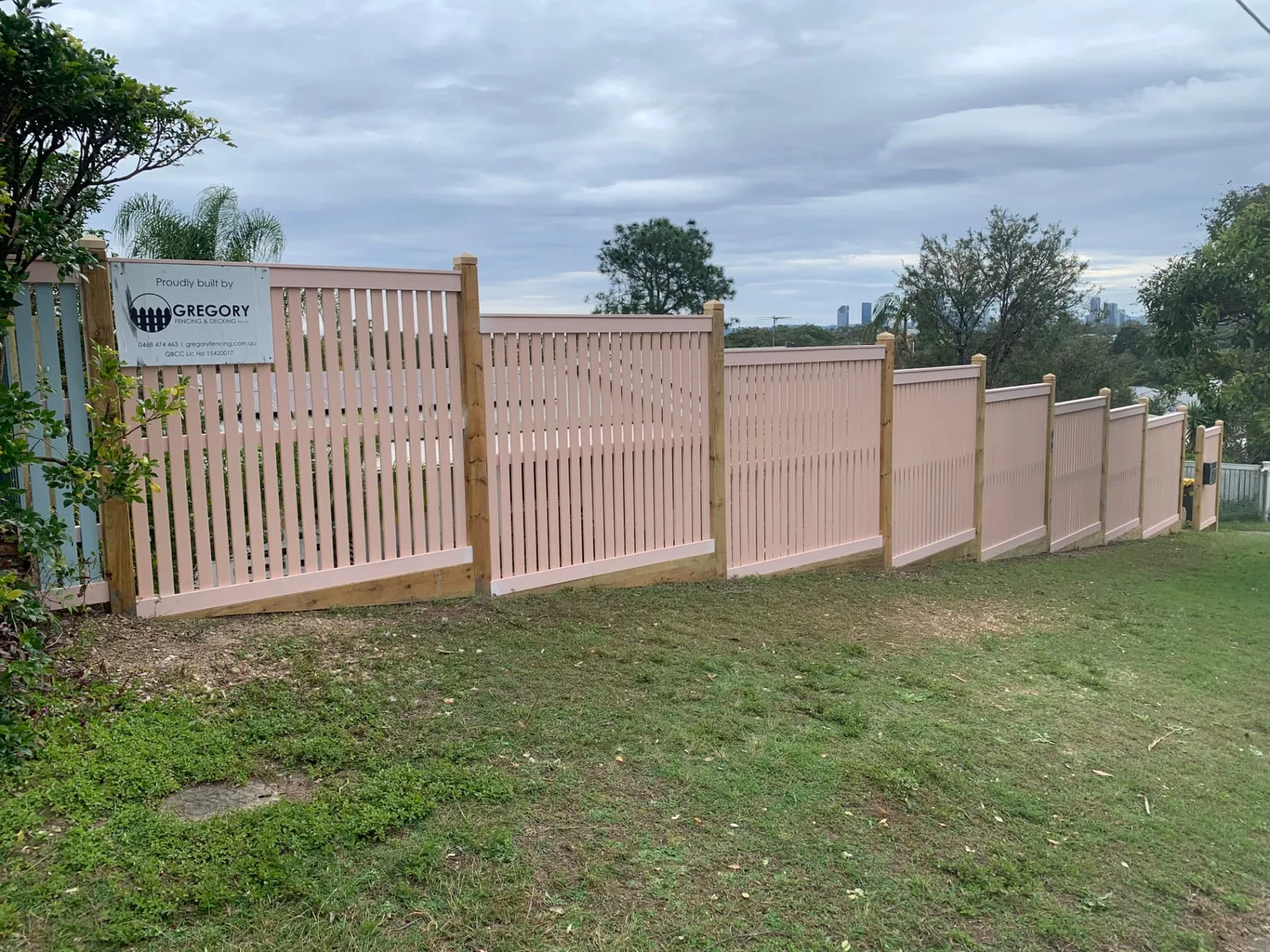
Fencing a sloping block in Brisbane usually comes down to a practical question: should your fence step down the hill or follow the slope?
Both approaches can work. The right choice depends on how sharply your land falls, the fence material, how much privacy you want and whether you need to keep pets safely inside. Gates, drainage and future landscaping also influence the design.
We recommend looking at the whole boundary before choosing a fence style. Here’s how we help you weigh up the options.
What is the difference between stepped and raked fencing?
A stepped fence uses level sections set at different heights. As the ground falls, each section drops, creating a stair-step pattern along the top of the fence. The posts remain upright.
A raked fence follows the slope, with its rails or panel arrangement angled to suit the ground while the posts remain upright. Depending on the system, the top and bottom edges follow a more continuous line down the hill.
There is also some middle ground. With individually installed timber palings or battens, we can sometimes adjust the layout to follow changing ground levels without relying on a series of rigid, level panels.
Neither approach automatically eliminates gaps underneath. That depends on the shape of the ground and the fence detail you choose.
When does a stepped fence make sense?
Stepped fencing can suit you if you like strong horizontal lines or your preferred fence system uses level panels. It can also work alongside terraced gardens, where changes in fence height line up with changes in the landscaping.
Potential advantages include:
- A clear, structured appearance.
- A layout that suits some prefabricated panel systems.
- The ability to coordinate height changes with garden terraces or other features.
The main trade-off is the gap beneath each section. On a consistent slope, a level panel generally sits closer to the ground at its uphill end and farther away at its downhill end.
Those gaps can matter if you have a small dog, want to screen a low-level view or prefer a visually solid boundary. Shorter sections may reduce individual gaps, but they can also mean more posts and a busier-looking fence.
When is a raked fence worth considering?
Raked fencing is often worth exploring when your block has a reasonably steady fall and you want the fence to flow with the landscape.
It may help achieve:
- A smoother-looking top line down a slope.
- More consistent clearance beneath the fence on even ground.
- A design that feels less segmented along a long boundary.
The important limitation is the fence system itself. Not every panel or connection is designed to rake, and systems that can rake have limits. We need to check the proposed product against the actual slope rather than assume it will fit.
Uneven ground presents another challenge. A fence following the overall fall will not necessarily follow every hollow, hump or tree root. Local adjustments or a combination of approaches may be more practical.
How does your fence material affect the choice?
Material selection and slope design need to happen together. A fence that looks straightforward on a flat display site may require a different layout on your boundary.
Timber paling fences offer flexibility because the individual palings can be positioned to suit the design. The rail layout, bottom clearance and finished top line still need careful planning.
Timber picket and batten fences can create either a stepped or a slope-following appearance. Spacing, alignment and post placement are particularly noticeable in these more open styles.
Aluminium fencing may use fixed panels or a system designed to accommodate a rake. We check the specific panel arrangement before recommending a layout.
Colorbond fencing also needs a system-specific approach. The slope can affect panel layout, post lengths and how the bottom edge meets the ground.
If you have a reference photo, send it through. We can discuss the look you want while checking what is practical for your site.
What about gaps, pets and privacy?
Start by telling us what the fence needs to do, not just how you want it to look.
For pets, the gap underneath can be just as important as the spacing between pickets or battens. Let us know your pet’s size and whether digging or squeezing through gaps is a concern. We can then discuss suitable bottom details without assuming an open gap will be acceptable.
For privacy, consider the view from both sides. A neighbour’s higher garden or an elevated outdoor area can change the sightline over a fence. Looking only from the lower side can give a misleading impression of the screening you will get.
We also need to account for ground clearance and water movement. Closing every visible gap with soil or timber is not necessarily a sound solution, especially where runoff passes through the boundary.
Plan gates and retaining walls early
A gate needs room to move, and sloping ground can interfere with that movement. A swing gate may clear the ground when closed but meet rising ground as it opens.
A sliding driveway gate needs suitable space beside the opening and a carefully considered support and operating arrangement. It is not automatically the answer to every sloping driveway.
Before settling on a gate, we look at the opening, surrounding levels and available space.
Retaining walls need separate attention. An ordinary boundary fence should not be treated as a retaining wall or have soil piled against it without an appropriate design. If your boundary already includes a wall, tell us whether you want the fence beside it or above it. The wall’s condition and proposed fence support may need assessment before the layout is finalised.
What affects the cost of fencing a sloping block?
The slope alone does not tell us how involved the job will be. The main cost drivers include:
- Fence length, material and finish.
- The steepness and consistency of the ground.
- Extra posts, custom sections or non-standard details.
- Access for removing the old fence and bringing in materials.
- Rock, roots or difficult digging conditions.
- Gate design and any retaining wall interfaces.
To help us quote, send photos looking along the boundary, a rough length, your preferred style and details of any gates. Mention planned landscaping too: changing ground levels later can affect a fence designed around today’s lawn or driveway.
We can help you compare stepped and raked options for your Brisbane property. Start with our fence quoting tool.