
Queensland Pool Fence Rules: A Plain-English Guide for Brisbane Homeowners
The key Queensland pool fence rules in plain English (height, gaps, gates, latches and climbable objects) from a Brisbane fencing builder.
Gregory Fencing & Decking7 November 2026 4 min read
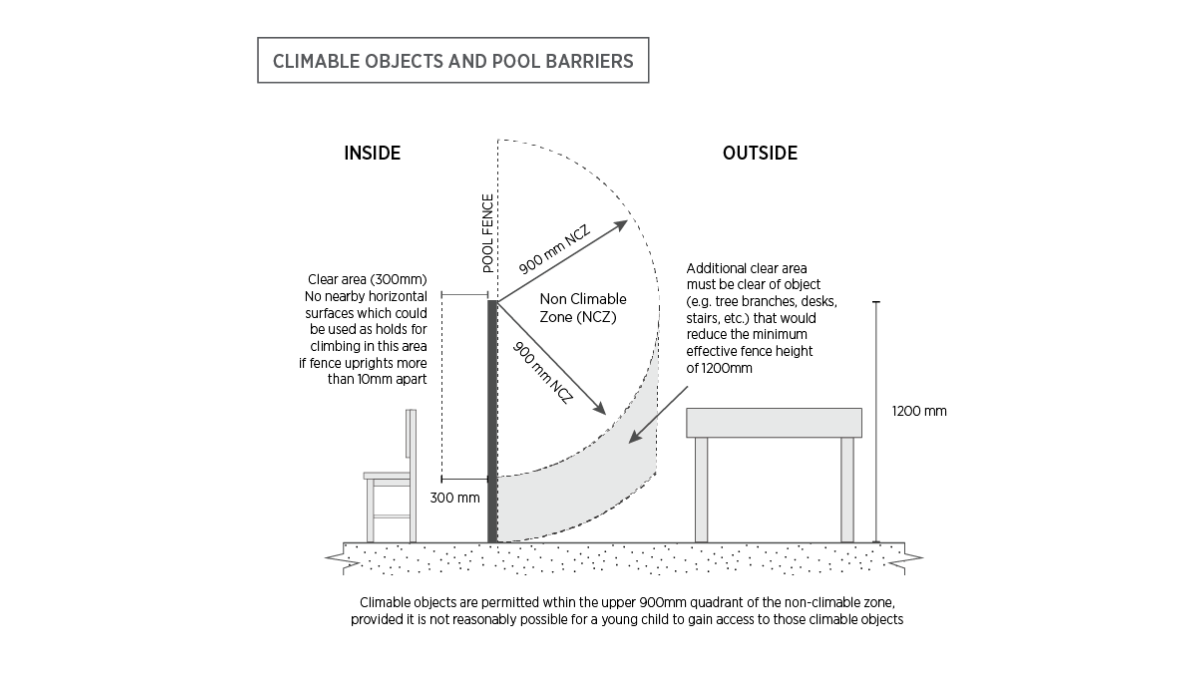
Diagram: Queensland Building and Construction Commission (QBCC).
If you own a pool or spa in Queensland, the law says its fence has to meet the state's pool safety standard, no matter when the pool was built. The rules are there for a very good reason: drowning is one of the leading causes of death for young children in Queensland, and a compliant fence keeps them out of the water.
We build pool fences across Brisbane, and the same handful of questions come up on almost every job. Below is a plain-English summary of the main rules, based on the Queensland Building and Construction Commission (QBCC) guidance.
Which pools need a compliant fence?
Pools, spas, and portable or inflatable pools that can hold more than 300 mm of water must comply with the pool safety standard. Regulated pools also need to be registered on the QBCC pool register, which is free.
Fence height and gaps
According to the QBCC pool fence rules, the fence must be:
- At least 1200 mm high, measured from finished ground level to the top of the fence.
- No more than 100 mm off the ground: that's the largest gap allowed under the fence.
- Built on stable, solid ground.
- At least 1200 mm high at every point on sloping or stepped sites. Measure square to the ground, not straight down, because slopes catch a lot of people out.
Vertical parts of the fence, like posts, slats or wires, can be up to 100 mm apart as long as the rails meet the non-climbable zone rule below.
The 900 mm non-climbable zone
A small child shouldn't be able to find a foothold to climb the fence. To stop that, the standard asks for:
- At least one 900 mm gap between horizontal rails on the outside of the fence, measured from the top of one rail to the top of the rail below.
- If your rails are closer together than 900 mm, you can either:
- fit a timber wedge with at least a 60-degree angle on top of each rail and keep the palings less than 10 mm apart, or
- build the fence more than 1800 mm high and put the non-climbable zone on the inside instead.
Timber paling fences often fall foul of this rule, especially where two fences meet in a corner. The QBCC recommends fitting wedges to the rails for at least 900 mm from the corner, on both sides.
Keep climbable objects away from the fence
This is the most common reason a fence that was compliant on day one stops being compliant later. Under the non-climbable zone rules, anything a child could climb on must be at least:
- 900 mm from the outside of the fence, and
- 300 mm from the inside (for fences under 1800 mm high).
Typical culprits include BBQs and outdoor furniture, pot plants, trees and overhanging branches, raised garden beds, garden edging, air-conditioning units, taps and pipework, toys and trampolines.
Gates, latches and hinges
The QBCC gate rules say pool gates must:
- Open away from the pool, never towards it.
- Be self-closing, and self-latch from any open position.
Latches on the outside of the gate must be at least 1500 mm from the ground, measured to the underside of the latch-release handle. Latches on the inside sit at least 150 mm below the top of the gate and need a 450 mm-radius shield, so little fingers can't reach through.
Hinges can be a foothold too. They need to be at least 900 mm apart, measured from the top of the lower hinge to the top of the upper one. If they're closer, the lower hinge needs a 60-degree safety cap.
It's an offence to prop a pool gate open. A quick check every few months is worth doing: open the gate to a few different positions and make sure it closes and latches every time.
Using a boundary fence as the pool fence
Lots of Brisbane pools use the dividing fence with the neighbour as part of the pool barrier. That's fine, but the fence must meet the pool standard. Queensland's rules on dividing fences as pool barriers work on a user-pays basis:
- If the work is needed to make your pool compliant, you generally pay for it.
- If you go ahead without your neighbour's agreement, you must give them Form 39 (Notice of proposed fencing work for a pool barrier) at least 14 days before work starts.
- The new section should generally match the existing fence, unless that would stop it from complying.
Talking to your neighbour early almost always makes this easier.
Selling or leasing a home with a pool
When you sell or lease a property with a regulated pool, you'll need a pool safety certificate (Form 23) from a licensed pool safety inspector. If the inspector finds problems, they'll give you a list of items to fix. That's often where we come in.
How we can help
We're a family-owned fencing business in Morningside, and we build timber, aluminium and Colorbond fences, including pool fencing. We can replace a non-compliant section, add a compliant gate, or build a new pool fence from scratch.
The fastest way to get a price is our online fence quoting tool. Mark out your fence on the map, choose your style, and we'll usually come back to you within 1–3 business days.
This guide is a plain-English summary of the QBCC pool safety standard at the time of writing. It isn't legal advice. Rules can change and every site is different, so check the current QBCC guidance or talk to a licensed pool safety inspector before relying on it.